 What's on
 Things to Do
 Plan your Visit
 Media Rules and Filming
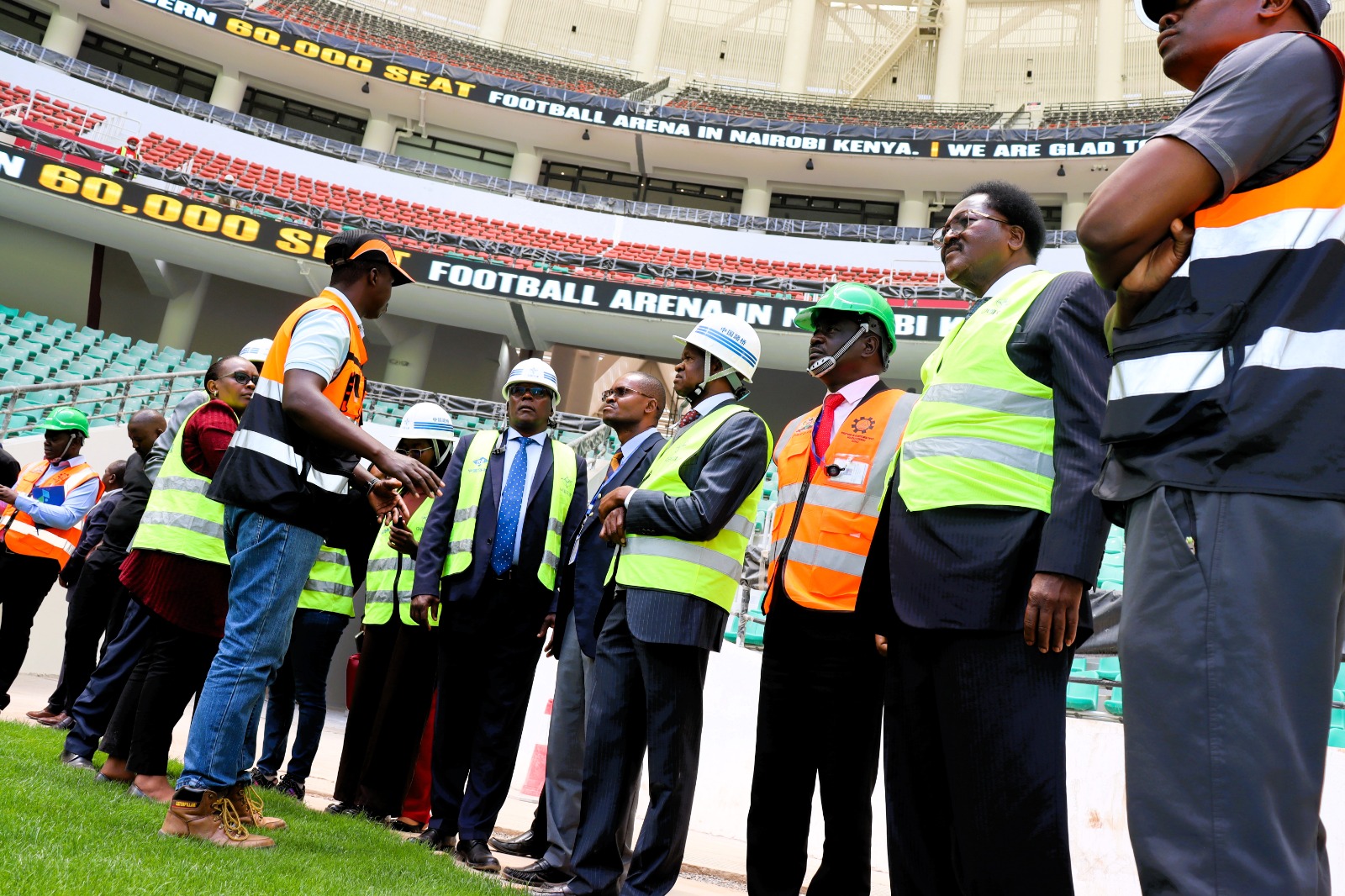
𝐒𝐄𝐍𝐀𝐓𝐄 𝐋𝐀𝐁𝐎𝐔𝐑 𝐂𝐎𝐌𝐌𝐈𝐓𝐓𝐄𝐄 𝐀𝐒𝐒𝐄𝐒𝐒𝐄𝐒 𝐓𝐀𝐋𝐀𝐍𝐓𝐀 𝐒𝐓𝐀𝐃𝐈𝐔𝐌 𝐀𝐒 𝐃𝐄𝐂𝐄𝐌𝐁𝐄𝐑 𝐀𝐅𝐂𝐎𝐍 𝐃𝐄𝐀𝐃𝐋𝐈𝐍𝐄 𝐍𝐄𝐀𝐑𝐒


The Raila Amolo Odinga International Stadium (Talanta Stadium) is racing towards completion ahead of the 2027 Africa Cup of Nations, with project officials putting overall construction at about 94 per cent but acknowledging that key technical, accessibility and operational issues remain outstanding.
The progress was assessed on Thursday during an inspection visit by the Senate Committee on Labour and Social Welfare, which examined the 60,000-seater facility’s readiness to host international matches and the supporting infrastructure required for the continental tournament.
The project is being overseen by the Ministry of Defence through the Kenya Defence Forces (KDF), which serves as the primary project manager and supervisor for the construction and engineering works, with the Ministry of Sports and other Government agencies providing technical support.
Officials said the main stadium is about 94 per cent complete, with external works at 93 per cent. Spectator seating for general, VIP, VVIP and media areas has been installed, while the eight-level shield façade is substantially complete. The hybrid playing surface has been stitched, drainage works completed and a 30-metre evacuation boulevard largely constructed.
The stadium will have 52 skyboxes, with internal finishing ongoing. An LED façade and musical fountain are already operational, adding to the venue’s planned entertainment offering.
However, the inspection exposed gaps between physical construction progress and full operational readiness.
Accessibility for persons with disabilities emerged as a particular concern. Committee Chair Sen. Julius Murgor (West Pokot) asked the Ministry of Labour and Social Protection to detail its assessment of accessibility and occupational safety at the facility. The Ministry’s representative said its officers had not been granted access to the stadium and had therefore been unable to undertake the assessment.
During the Committee’s tour of the facility, it was established that an access ramp serves the first floor and lifts provide access up to fourth floor. However, designated spectator seating for persons with disabilities was not available at the time of the visit.
Training facilities are also at varying stages of completion. The newest training ground has 1,500 seats and a completed roof, with four changing rooms undergoing internal finishing. Two additional training pitches are at 38-40 per cent completion, with drainage, irrigation and running-track foundations substantially advanced but final surfaces yet to be installed.
Officials cautioned that the hybrid and artificial pitches would require specialised maintenance equipment and sustained technical management to prevent deterioration.
The Committee was also briefed on utilities. Eight generators have been procured and installed to provide power—four serving as duty generators and the other four backup generators—while solar installations will primarily serve external lighting. Water requirements will be supported by municipal supply, three boreholes, a 600,000-litre rainwater harvesting tank and a 1-million-litre municipal storage tank.
Transport and crowd management remain critical outstanding issues. Officials said discussions with Kenya Railways and the Kenya Urban Roads Authority are ongoing, including plans for a commuter rail connection, improvements to Jamhuri Road and linking the stadium to the Southern Bypass.
The stadium will have nine entry and exit gates serving spectators, teams, media, VIPs, organisers and emergency services, with the eastern plaza along Jamhuri Road serving as the principal spectator entrance. Sen. Seki Lenku (Kajiado) nevertheless sought clearer arrangements for spectator drop-off, pick-up and traffic circulation.
Security and regulatory access also came under scrutiny. The construction site is being treated as restricted, with project officials citing national security considerations and Ministry of Defence oversight. Members raised concerns over the ability of regulatory agencies to conduct timely inspections where access requires formal clearance.
The project team said outstanding Confederation of African Football (CAF) requirements would be addressed ahead of a further inspection in December. Officials are targeting full readiness by December, followed by two to three months of testing of specialist systems before competition use.
Beyond AFCON, plans are being developed to commercialise the facility through concerts and other events, while 17 commercial concessions have been identified for tournament operations. Officials also reported that about 210 hotels had applied for accreditation to accommodate visitors.
With the major structural works substantially advanced, the Committee’s inspection shifted attention to the final test of readiness: whether Talanta Stadium can deliver not only a completed structure, but a safe, accessible and fully operational international sporting venue by the time AFCON 2027 arrives.