
 What's on
 Things to Do
 Plan your Visit
 Media Rules and Filming

RISING PUBLIC DEBT THREATENS PRIVATE SECTOR GROWTH, STAKEHOLDERS WARN


The National Assembly’s Committee on Public Debt and Privatisation has raised concerns over the impact of rising public debt and increased domestic borrowing on private-sector growth, with stakeholders warning that businesses are being squeezed out of the credit market.
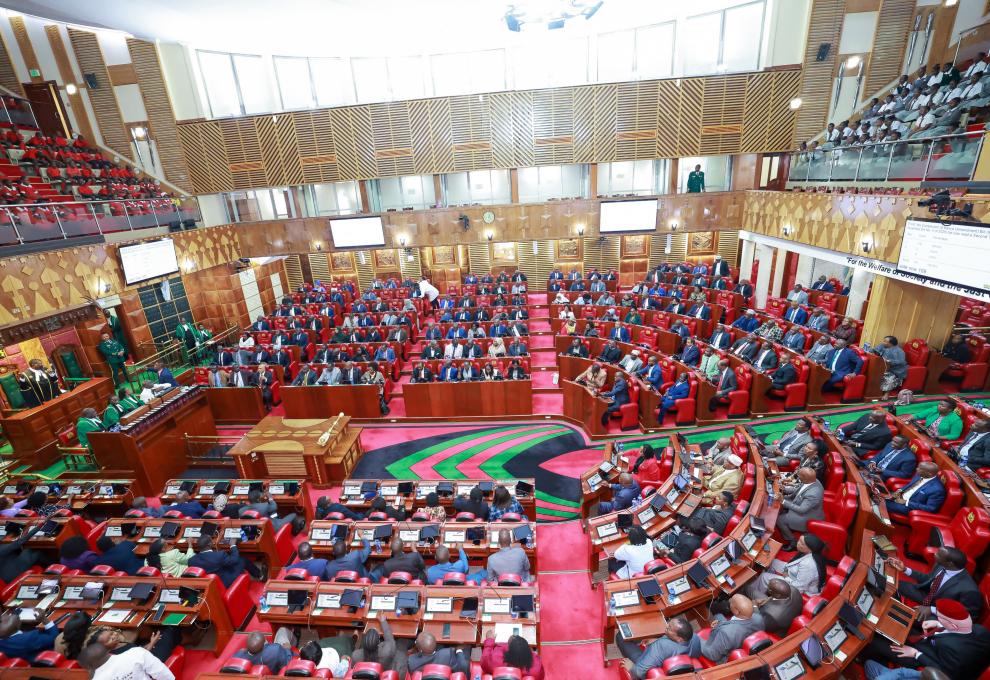
The committee, chaired by Hon. Abdi Shurie (Mbalambala), made the remarks during the opening of a three-day Multisectoral Forum on Public Debt Management, organised in partnership with the National Democratic Institute (NDI).
The inaugural forum brings together Parliament, private-sector representatives and other stakeholders to examine Kenya’s public debt policy and its wider economic implications.
Opening the forum, Shurie said private-sector input was critical in shaping sustainable fiscal policies and addressing the country’s debt challenges.
“Your input will be highly appreciated and I’m sure it will go a long way in addressing the challenges we face in dealing with matters of public debt,” Shurie said.
The first day focused on public debt sustainability, private-sector growth and economic productivity, access to credit and the competitiveness of the manufacturing sector, as well as the implications of domestic borrowing for private-sector credit, investment and financial-sector stability.
The Kenya Private Sector Alliance (KEPSA), Kenya Association of Manufacturers (KAM) and Kenya Bankers Association (KBA) led discussions on the respective areas.
A key concern was the growing “crowding-out” effect, where banks increasingly favour lending to the Government through Treasury securities because they are perceived as less risky and offer attractive returns compared with lending to businesses.
Arnold, a Finance Manager at KBA, said the trend was limiting credit available to ordinary borrowers and businesses.
“As government appetite for local borrowing goes up, then banks being businesses… you put your money there. We’ve seen a crowding-out effect where banks then put most of their investments to government through purchase of government papers as compared to onward lending to the normal customer,” he said.
KBA said bank investments in Government securities grew by 58 per cent between June 2024 and May 2026, compared with an 11 per cent increase in private-sector lending during the same period.
Stakeholders warned that the trend was also increasing the banking sector’s exposure to sovereign risk, with nearly 30 per cent of total banking-sector assets reportedly tied to the Government.
KAM raised further concerns over the declining contribution of manufacturing to the economy, noting that the sector’s contribution to GDP had fallen from 11.8 per cent in 2011 to about 7.1 per cent currently.
High production costs, expensive energy and limited access to affordable credit were cited among the major challenges facing manufacturers.
KEPSA, meanwhile, called for greater use of Public-Private Partnerships (PPPs) to finance development projects and urged the Government to provide a more predictable and stable tax regime to boost investor confidence.
The forum also raised concerns over transparency and accessibility of public debt information. Participants called for the automation of the Public Debt Management Office to enable citizens, investors and policymakers to access up-to-date information on the country’s debt position.
Hon. Zachary Kwenya (Kinangop) questioned why Kenyans should rely on committees to track the country’s debt instead of having readily accessible digital information.
“It is really concerning when as a country we have to form a committee to track our debt; you just need to have a website where you click on it [and] you see the public debt,” Kwenya said.
Stakeholders said reducing the Government’s appetite for domestic borrowing, expanding access to affordable credit and supporting industrialisation would be critical to reviving private-sector investment, job creation and economic growth.
The three-day forum is expected to strengthen collaboration between Parliament and the private sector and generate practical policy recommendations on sustainable debt management, economic growth, investment and job creation.