
 What's on
 Things to Do
 Plan your Visit
 Media Rules and Filming
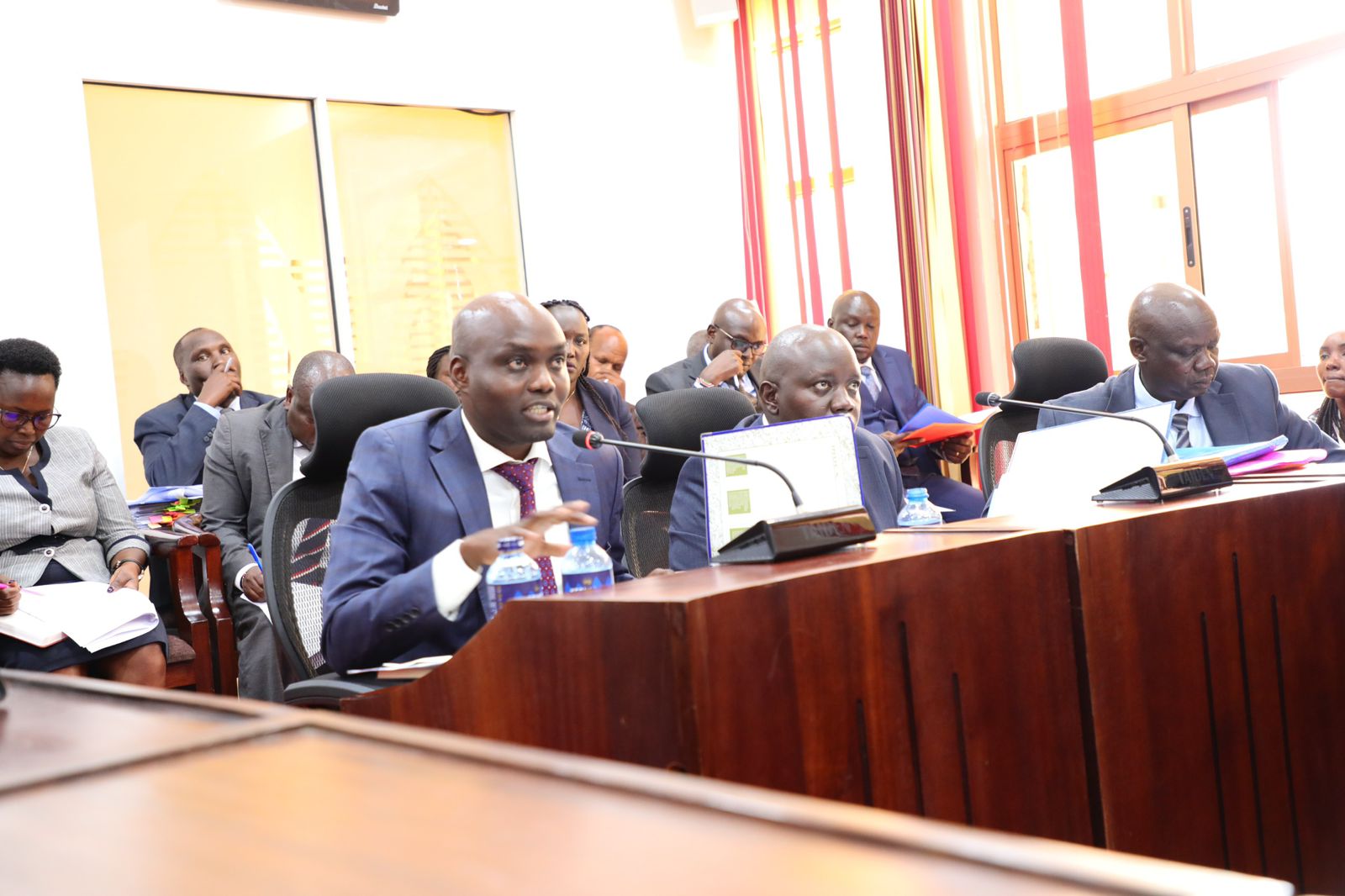
𝐂𝐏𝐀𝐂 𝐖𝐀𝐍𝐓𝐒 𝐄𝐋𝐆𝐄𝐘𝐎 𝐌𝐀𝐑𝐀𝐊𝐖𝐄𝐓 𝐓𝐎 𝐈𝐌𝐏𝐑𝐎𝐕𝐄 𝐀𝐂𝐂𝐎𝐔𝐍𝐓𝐈𝐍𝐆 𝐎𝐅 𝐁𝐈𝐎𝐋𝐎𝐆𝐈𝐂𝐀𝐋 𝐀𝐒𝐒𝐄𝐓𝐒


The County Executive of Elgeyo Marakwet has been directed to improve how it accounts for biological assets, following concerns raised by the Senate County Public Accounts Committee (CPAC).
The directive was issued after Governor Wesley Rotich failed to satisfactorily explain how the county accounts for assets classified under the biological category, with the Committee noting that the current system lacks clear categorisation.
According to the Auditor-General, the county’s accounting system does not clearly distinguish between biological assets distributed to farmers—such as seedlings—and those retained by the county, including livestock, crops, and plants.
In accounting terms, biological assets refer to living plants or animals owned and used for agricultural activity. These assets grow, reproduce, or undergo biological transformation and are expected to generate future economic benefits. They include livestock such as cattle, sheep, goats, poultry and fish, as well as crops in the field, fruit trees, tea bushes, coffee plants, and timber trees.
For instance, a county may own dairy cows, with milk produced considered agricultural produce (inventory). Once sold, the milk is recognised as revenue.
The Auditor-General reported that the Elgeyo Marakwet County Executive allocated Sh274 million to biological assets but failed to account for changes in fair value arising from growth and valuation. This raised doubts about the accuracy, valuation, and completeness of the biological assets balance of Sh274 million, which could not be confirmed.
However, Governor Rotich maintained that the county could not quantify the assets because none remained in its possession.
“These assets are owned by farmers. We receive them and pass them on. Nothing remains with the county, and we will only quantify them after valuation,” the Governor said.
He explained that the reported figure represents the historical cost of all biological assets acquired, including seedlings and breeding stock.
“The fair value of these assets will be addressed during the ongoing assets verification and valuation exercise in the county,” he said, adding that there were no changes in fair value during the financial year since seeds and breeding stock are currently recognised under use of goods and services as they are distributed directly to farmers.
However, CPAC Chairperson Senator Johnes Mwaruma questioned why no change in value was recorded, noting that other biological assets such as livestock, semen, and crops should ordinarily attract valuation changes.
The Committee later agreed that biological items distributed to farmers or other groups for support purposes should be treated as expenses rather than assets.
In a separate matter, CPAC directed the county to fill vacant positions where officers have been serving in acting capacities for extended periods.
A review of human resource records revealed that seven senior county officials have held acting positions beyond the stipulated six-month period. Further scrutiny of personal files showed that two officers—the Director of Human Resources and the Director of the Alcoholic Drinks Control Fund—were serving in acting capacities without official appointment letters.
Additionally, the Director of Supply Chain Management has been in an acting role since February 9, 2022, following an appointment letter dated March 10, 2022, issued by the County Secretary.
The County Public Service Board failed to provide evidence of efforts to recruit substantive office holders despite the prolonged acting appointments, contrary to Section 34(5)(b) of the Public Service Commission Act, which limits acting appointments to a maximum of six months.
Governor Rotich admitted that the officers had served beyond the stipulated period but said the county is in the process of regularising the appointments.