 What's on
 Things to Do
 Plan your Visit
 Media Rules and Filming

𝐋𝐀𝐌𝐔 𝐋𝐄𝐀𝐃𝐄𝐑𝐒 𝐏𝐔𝐒𝐇 𝐅𝐎𝐑 𝐒𝐏𝐄𝐄𝐃𝐘 𝐋𝐀𝐏𝐒𝐒𝐄𝐓 𝐂𝐎𝐌𝐏𝐋𝐄𝐓𝐈𝐎𝐍 𝐀𝐒 𝐏𝐔𝐁𝐋𝐈𝐂 𝐕𝐄𝐍𝐓 𝐕𝐈𝐄𝐖𝐒 𝐎𝐍 𝐒𝐎𝐔𝐓𝐇 𝐋𝐎𝐊𝐈𝐂𝐇𝐀𝐑 𝐎𝐈𝐋 𝐏𝐋𝐀𝐍


Leaders from Lamu County, Members of Parliament and senators have renewed calls for the full implementation of the Lamu Port–South Sudan–Ethiopia Transport (LAPSSET) Corridor, warning that failure to complete any component of the flagship project risks undermining its economic promise and marginalising coastal and northern communities.
Speaking during a public participation forum on the South Lokichar Oilfield Development Plan, Lamu Governor Issa Timamy said the county was ready to seize opportunities presented by LAPSSET, particularly in skills development and knowledge transfer.
“We need to exploit the opportunity and implement the LAPSSET master plan and explore transfer of knowledge to Kenyans by developing manpower,” Governor Timamy said.
He noted that despite Lamu’s strategic advantages, including its deep waters and rich natural history, the region has yet to fully benefit from its resources.
“We have the deepest sea in the world yet we rarely benefit from it. We have not exploited the natural history and we are losing a lot of opportunities, but let us not lose this oil pipeline opportunity,” he said, adding that Lamu is also the country’s largest producer of cotton and an emerging economic hub.
Lamu County Commissioner Wesley Koech assured investors and residents that the county is secure and open for business, saying the prevailing security environment supports large-scale investments linked to the corridor.
Infrastructure readiness at the port was also highlighted, with leaders noting that Lamu Port is equipped to handle global maritime traffic.
“We have three state-of-the-art cranes at our port and any size of ship can dock here at Lamu Port,” Governor Timamy said.
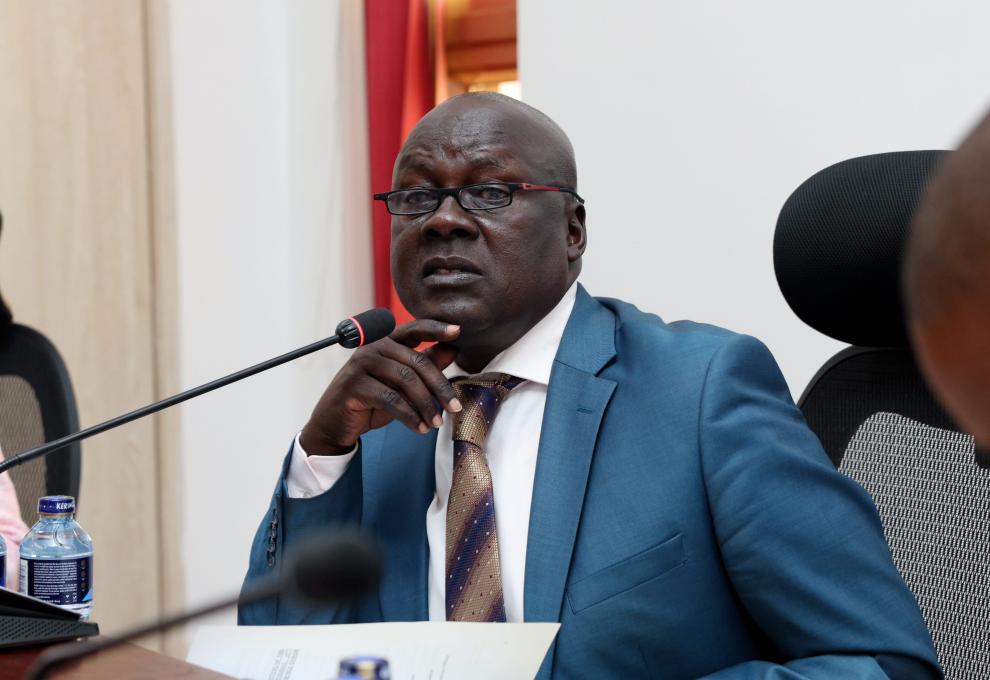
Lawmakers present emphasised that the forum was intended to gather public views rather than impose decisions. A member of the Joint Committee, Hon. Julius Mawathe, said public participation was central to the South Lokichar Oilfield Development Plan.
“Our purpose here is for public participation and to listen to you rather than conclude on the South Lokichar Oilfield Development Plan,” Mawathe said.
He added that Kenya must continue pushing for completion of the entire corridor, noting that Ethiopia and South Sudan remain key partners for the oil pipeline component.
Cost efficiency emerged as a major argument in favour of the pipeline. Hon. Ruweida said transporting oil through a pipeline is significantly cheaper than by road.
“It costs about five dollars to transport oil using a pipeline compared to twenty dollars by road,” she said, warning that removing any component of LAPSSET could breed mistrust among communities.
“LAPSSET supports about 800 million people along the corridor. Removing one component will bring mistrust among marginalised communities in Lamu and other East African countries,” she said.
Senate oversight was also emphasised, with Sen. Beatrice Ogolla saying the visit was meant to assess preparedness for oil evacuation from Turkana.
“We are here to hear from you and assess preparedness of the LAPSSET project for the evacuation of oil from South Lokichar Oilfields,” she said.
Officials from the LAPSSET Corridor Development Authority said the project is a regional undertaking involving Kenya, Ethiopia and South Sudan, but faces coordination and funding challenges.
“This is a special project between three countries. Our main challenge is that LAPSSET has been moved from one ministry to another, leading to poor coordination and reduced funding,” the authority’s chief executive said.
Land acquisition along the corridor remains another major bottleneck, with officials noting that compensation delays have slowed progress.
“Land acquisition is expensive along the corridor, but compensation is a constitutional right,” the CEO said.
The authority revealed that 821 kilometres of pipeline mapping and design have already been completed and construction is now awaited. The pipeline is also expected to generate revenue by transporting South Sudanese crude.
“The pipeline will not only serve South Lokichar crude oil. We can earn about 35 dollars per barrel by transporting oil from South Sudan, which produces 110,000 barrels per day and is currently unable to export due to the war in Sudan,” the CEO said.
Regional integration prospects were also highlighted, with Hon. Elisha Odhiambo pointing to Ethiopia’s vast market.
“We have great opportunities in Ethiopia because of their huge population of 137 million people,” he said.
Questions were raised over Uganda’s exclusion from the corridor. Hon. Kingara said there was need to reconsider whether LAPSSET could be opened to other East African countries.
“I don’t know why Uganda was left out of the LAPSSET project. Is it closed, or can we open up the corridor to other East African countries?” he posed.
The Joint Committee Co-chairman, Hon. Aramat assured residents that their concerns had been heard and pledged parliamentary support.
“We have listened and we shall support you because we believe in equality for every Kenyan,” he said.
Leaders concluded that only full and coordinated implementation of all LAPSSET components — including the port, highways, railway, oil pipeline, resort cities and international airports — would deliver the transformative impact envisioned for Lamu, northern Kenya and the wider region.