
 What's on
 Things to Do
 Plan your Visit
 Media Rules and Filming
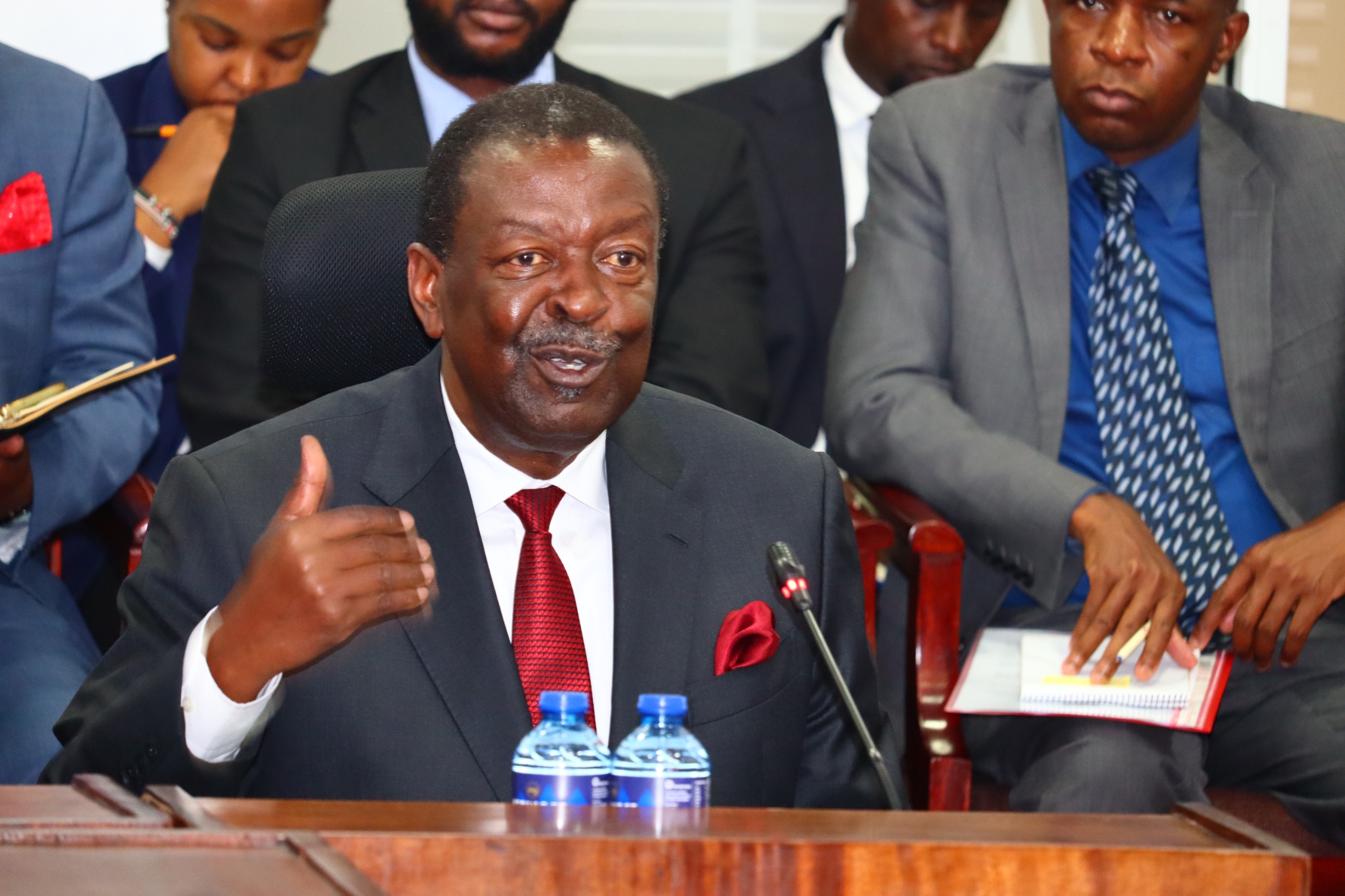
𝐒𝐄𝐍𝐀𝐓𝐄 𝐋𝐀𝐁𝐎𝐔𝐑 𝐂𝐎𝐌𝐌𝐈𝐓𝐓𝐄𝐄 𝐏𝐑𝐄𝐒𝐒𝐄𝐒 𝐌𝐔𝐃𝐀𝐕𝐀𝐃𝐈 𝐎𝐕𝐄𝐑 𝐓𝐑𝐀𝐅𝐅𝐈𝐂𝐊𝐈𝐍𝐆 𝐀𝐍𝐃 𝐊𝐄𝐍𝐘𝐀𝐍𝐒 𝐈𝐍 𝐅𝐎𝐑𝐄𝐈𝐆𝐍 𝐖𝐀𝐑𝐒


The scale of exploitation facing Kenyan workers abroad came under intense scrutiny on Thursday as Senators confronted government officials over trafficking syndicates, fraudulent recruiters and the growing number of Kenyans caught in foreign conflicts and cybercrime networks.
Appearing before the Senate Committee on Labour and Social Welfare, Prime Cabinet Secretary Musalia Mudavadi described a crisis stretching from the Gulf to south-east Asia and the battlefields of Ukraine and Russia, warning that trafficking networks were becoming increasingly sophisticated.
Mudavadi told Senators that the so-called “Golden Triangle” — spanning Myanmar, Cambodia, Laos and Thailand — had become a major hub for trafficking and cyber-enabled crime targeting young Kenyans seeking work abroad.
Between 2022 and 2026, he said, 751 Kenyans had been rescued from Myanmar, with 615 repatriated. Thirty-nine remain jailed over illegal entry and cybercrime offences, while about 97 others are being held in immigration detention centres in Thailand awaiting deportation.
In Cambodia, 406 Kenyans were rescued between January and April this year, with 305 already returned home. Laos has repatriated 29 Kenyans to date, while 14 Kenyans are imprisoned in Thailand for using forged immigration stamps allegedly supplied by traffickers.
Mudavadi also confirmed deaths linked to the scam compounds.
“Over time, three Kenyans have reportedly lost their lives in the scam compounds due to illness, while one expectant lady passed on after the scammers attempted to forcefully terminate the pregnancy,” he said.
The committee also heard that 162 Kenyans had been smuggled to Qatar by what Mudavadi termed “unscrupulous individuals” operating in Kenya and Qatar, with investigations now before the Directorate of Criminal Investigations.
Particular concern centred on Kenyans recruited into the Russian special forces amid the war in Ukraine. Mudavadi said the government had documented 291 reported cases and repatriated 53 Kenyans from Russia.
Nineteen Kenyans are believed to have died, 32 are missing in action, and two are currently being held as prisoners of war in Ukraine.
Mudavadi revealed that a Kenyan delegation which travelled to Moscow in March had secured commitments from Russian authorities to halt further recruitment of Kenyans into military operations.
“One, that there should be no more enlisting of Kenyans to the special military forces of the Russian Federation,” he said.
The talks, he added, also secured assurances on consular access for Kenyans in hospitals and civilian facilities, and discussions on facilitating the voluntary disengagement of Kenyans involved in combat.
The government is also lobbying both Moscow and Kyiv to include Kenyan nationals in any future prisoner of war exchanges.
“We also want the Russian Federation to include them when there is a prisoner exchange,” Mudavadi told Senators, adding that Kenya was simultaneously engaging Ukraine “to see if they can also work towards helping us have these Kenyans released and sent back to their families”.
Officials said traffickers were increasingly exploiting social media and online job platforms, luring victims with promises of lucrative positions in information technology, customer care, cryptocurrency trading and online casinos.
Mudavadi said victims were often forced into criminal activities including romance scams, online fraud and “pig butchering” schemes — elaborate scams in which victims are manipulated into fake investment schemes.
Traffickers, he warned, were “strategically targeting young and unemployed individuals seeking opportunities abroad”, including people with digital skills and former military personnel.
The government defended its efforts, citing the deregistration of more than 600 non-compliant recruitment agencies, the creation of a 24-hour diaspora emergency call centre, and plans for tougher legislation and a diaspora welfare fund.
But Senators questioned whether enforcement efforts were adequate.
Sen Joe Nyutu (Muranga) criticised the government’s reliance on deregistration, arguing that rogue recruiters simply reopen under new company names.
“Have we taken legal action, because this is a crime?” he asked.
Diaspora Affairs Principal Secretary Roseline Njogu responded that 87 prosecutions linked to trafficking and illegal labour recruitment were ongoing, noting that many offenders now operated as informal sub-agents outside the licensed system.
The committee’s vice-chair Sen Crystal Asige questioned the slow pace of bilateral labour agreements with countries where abuse is widespread, while Sen Okong'o Mogeni (Nyamira) demanded that existing agreements be tabled before the Committee within seven days to assess whether they adequately protect Kenyan workers.
Mogeni also urged the government to focus on creating jobs locally rather than over-relying on labour export.
Sen Miraj Abdullahi challenged the effectiveness of public awareness campaigns aimed at warning young people against fraudulent recruiters. Njogu maintained that sensitisation drives were ongoing in TVET institutions, universities and county town halls, including a recent forum at Bandari College in the coast.
By the end of the session, there was consensus on one point: the trafficking crisis is no longer simply a foreign affairs problem, but a reflection of economic despair at home. For many young Kenyans chasing jobs overseas, the risks of exploitation, detention or even death are increasingly seen as preferable to unemployment — a reality Senators warned could continue fuelling trafficking networks despite government crackdowns.