 What's on
 Things to Do
 Plan your Visit
 Media Rules and Filming

𝐌𝐏𝐒 𝐓𝐎 𝐓𝐀𝐂𝐊𝐋𝐄 𝐁𝐔𝐃𝐆𝐄𝐓, 𝐒𝐔𝐏𝐏𝐋𝐄𝐌𝐄𝐍𝐓𝐀𝐑𝐘 𝐄𝐒𝐓𝐈𝐌𝐀𝐓𝐄𝐒 𝐀𝐒 𝐇𝐎𝐔𝐒𝐄 𝐑𝐄𝐒𝐔𝐌𝐄𝐒


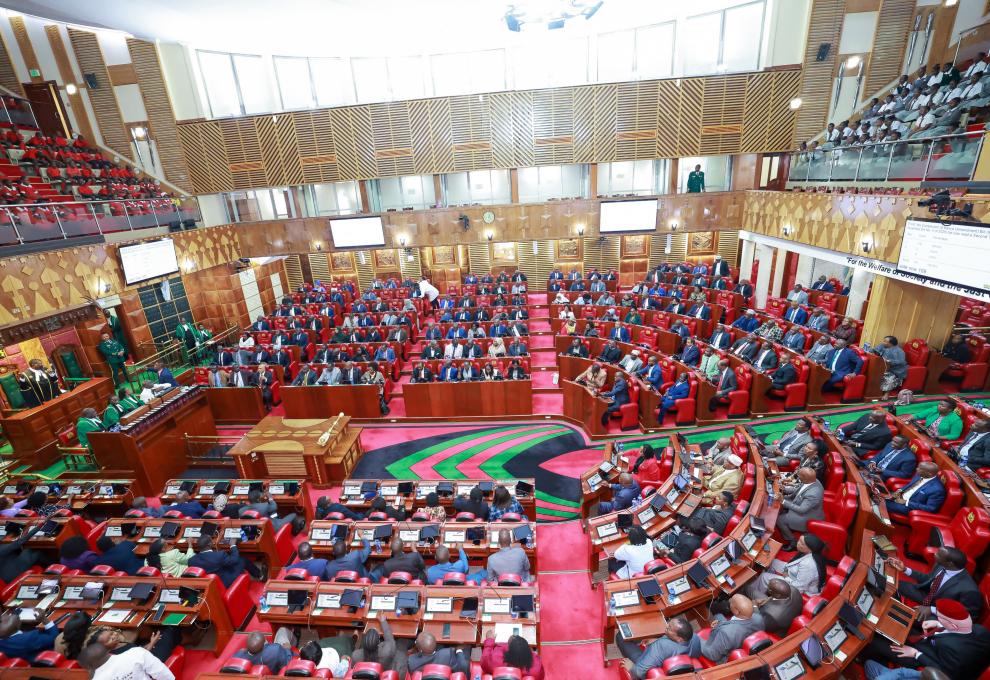
The National Treasury is expected to table the Supplementary Estimates I for the 2025/26 financial year, the 2026 Budget Policy Statement (BPS), and the Medium-Term Debt Management Strategy in line with the Constitution of Kenya and the Public Finance Management Act once the National Assembly resume sittings on Tuesday, 9th February 2026.
According to the draft 2026 BPS, the total budget for the 2026/27 financial year is projected at KSh 4.18 trillion, up from KSh 3.92 trillion in the current financial year. The resource envelope includes KSh 3.32 trillion in total revenue, leaving a fiscal deficit of KSh 866 billion, or 4.6% of GDP, to be financed through KSh 586 billion in domestic borrowing and KSh 280 billion from external sources.
The Treasury will seek Parliament’s approval for the Supplementary Estimates to adjust for revenue underperformance and additional expenditure pressures. Once tabled the Supplementary Estimates will be committed to the Departmental Committees of the National Assembly for consideration with Ministries, State Departments and Agencies.
At the 2026 Legislative Retreat, National Treasury Principal Secretary Dr. Chris Kiptoo outlined the fiscal constraints and reforms underpinning the FY2026/27 budget framework.
“Implementation of the current budget has been affected by shortfalls in ordinary revenue amounting to KSh 115.3 billion by December 2025,” Dr. Kiptoo said. “We are tightening expenditure controls and prioritizing ongoing projects through a zero-based budgeting approach.”
Dr. Kiptoo noted that Kenya’s economy remains resilient, with GDP growth projected at 5.2% in 2026, supported by declining inflation (4.5% in December 2025), stable exchange rates (KSh 129 to the dollar), and upgraded sovereign credit ratings by Moody’s and S&P Global.
Addressing Members on the upcoming budget cycle, 2026 Legislative Retreat, National Assembly Speaker Moses Wetang’ula urged legislators to approach the budget-making process with greater focus on policy coherence rather than mere numerical adjustments.
“During the Budget process, Members place great emphasis on figures and amendments. However, it is important that equal attention is paid to the underlying policy considerations that inform those numbers,” he stated.
The Speaker cautioned lawmakers against making hasty reallocations that could jeopardize key development programmes. “Some allocations serve as counterpart funding for critical projects. Reducing them may lead to loss of development funding and derail progress,” he warned.
Under the draft 2026/27 Budget, education remains the top-funded sector with an allocation of KSh 658.5 billion 15.7%. Other major allocations include national security, KSh 373.8 billion, health KSh 235.2 billion, and agriculture KSh 196.4 billion. The health sector’s funding is expected to support the rollout of the Social Health Insurance Fund (SHIF) and completion of county hospitals, while the agricultural budget focuses on irrigation and fertilizer subsidy programmes.
“This Fifth Session gives Parliament a final window to shape Kenya’s economic governance legacy,” said Hon. Kuria Kimani, Chairperson of the Finance and National Planning Committee, adding that fiscal discipline, debt management, and equitable resource allocation will define the House’s legacy.