
 What's on
 Things to Do
 Plan your Visit
 Media Rules and Filming
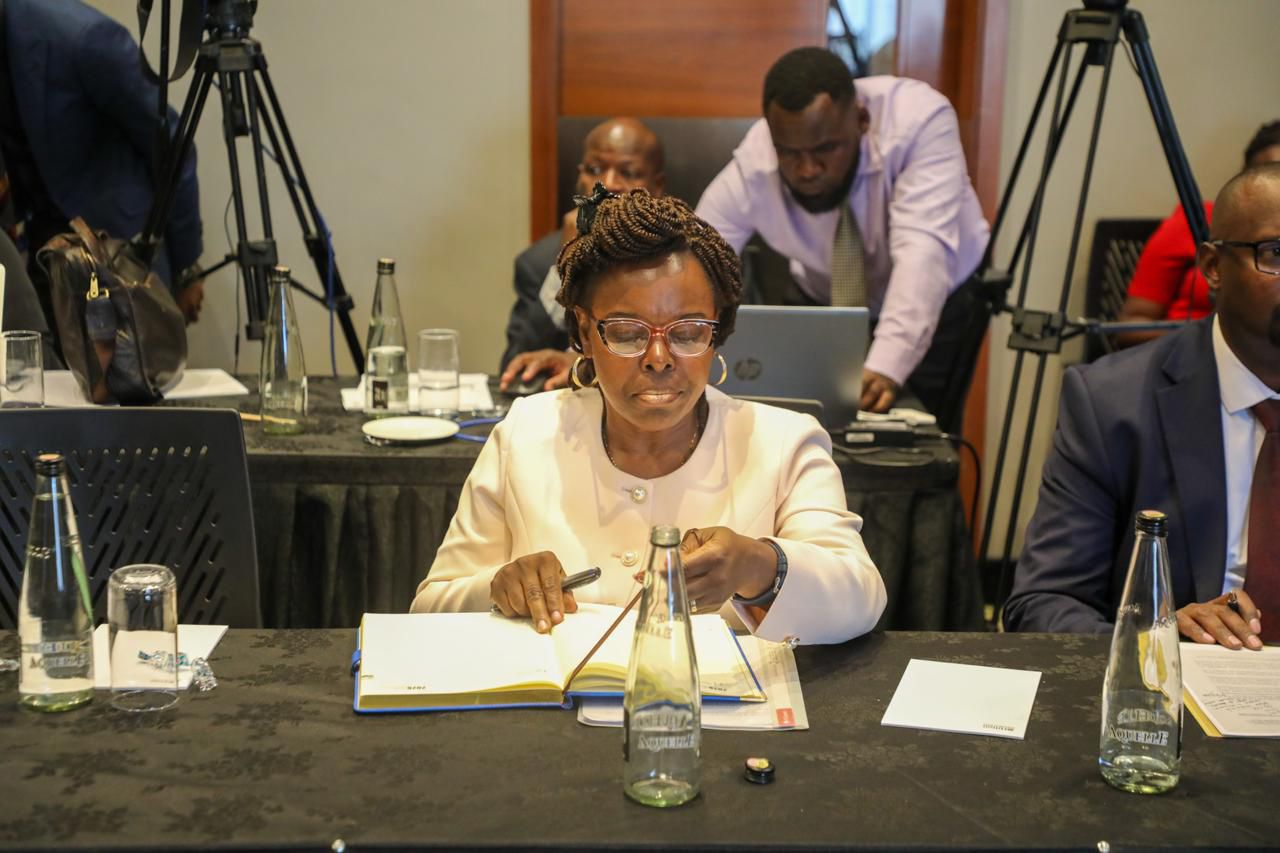
𝐂𝐎𝐍𝐓𝐑𝐎𝐋𝐋𝐄𝐑 𝐎𝐅 𝐁𝐔𝐃𝐆𝐄𝐓 𝐎𝐔𝐓𝐋𝐈𝐍𝐄𝐒 𝐒𝐀𝐅𝐄𝐆𝐔𝐀𝐑𝐃𝐒 𝐎𝐍 𝐎𝐈𝐋 𝐄𝐗𝐏𝐎𝐑𝐓 𝐄𝐀𝐑𝐍𝐈𝐍𝐆𝐒


The Controller of Budget, Dr. Margaret Nyakango, has reaffirmed that Office of the Controller of Budget’s mandate to safeguard transparency and accountability in the management of public funds, as Parliament considers the Field Development Plan (FDP) and Production Sharing Contracts (PSCs) for oil blocks in the South Lokichar Basin.
In a report submitted to the Senate Standing Committee on Energy and the National Assembly Departmental Committee on Energy in February 2026, the Controller of Budget detailed the institution’s role in overseeing any revenues and expenditures arising from crude oil development and exports.
Established under Article 228 of the Constitution, the Office of the Controller of Budget is mandated to oversee the implementation of both national and county government budgets. The office executes this responsibility by authorising withdrawals from public funds and submitting quarterly reports to Parliament on budget implementation.
The report notes that the Controller of Budget cannot approve any withdrawal from public funds unless satisfied that the expenditure is authorised by law. This requirement, anchored in Article 228(5) of the Constitution, ensures that all public spending adheres to legal and constitutional provisions.
“In executing this mandate, the office is guided by the principles of public finance under Article 201, which emphasise prudent, responsible and transparent use of public resources.” She said.
The Controller of Budget performs several key functions. Its oversight role involves monitoring how national and county governments utilise public funds and reporting to Parliament on the same. Through its controlling role, the office authorises withdrawals from critical public funds, including the Equalisation Fund, the Consolidated Fund and the County Revenue Fund, ensuring that each withdrawal meets constitutional and legal requirements.
In addition, the office plays a reporting role by preparing quarterly, annual and special reports on budget implementation at both levels of government. These reports are aimed at enhancing transparency and strengthening accountability in public finance management. The Controller of Budget also serves an advisory function, offering guidance to Parliament and county governments on financial matters, particularly in situations where the National Treasury exercises its powers to suspend transfers of funds to state organs or public entities.
As Kenya advances plans for crude oil production and export, the Controller of Budget has underscored the importance of robust reporting mechanisms and legislative clarity to ensure that oil revenues and profit shares are properly received, accounted for and budgeted. The office signalled its readiness to regularly apprise Parliament and county assemblies on financial arrangements related to oil exports, drawing lessons from previous pilot oil schemes undertaken in the country.
The report highlights the need to address existing legislative and policy gaps surrounding the receipt and management of oil revenues to guarantee that proceeds from the emerging petroleum sector are managed in strict compliance with the Constitution and in the best interest of the public.